
Science and Spirituality: Why They’re Not a Contradiction
For years, I lived in the world of laboratories, chemistry, mechanisms, and measurable outcomes.
Today, I work in somatic coaching, nervous system regulation, and psychedelic preparation and integration.
To me, science and spirituality are not opposites. Most attempts to bridge them are dishonest in one direction or the other — either dressing wellness platitudes in lab coats, or smuggling mystical claims under the cover of credentials. I am interested in neither. What I notice instead is that the most rigorous science is often describing, with much greater precision, what the contemplative traditions have been pointing at for two thousand years.
Science helps us observe patterns, test what is true, and stay honest. Spirituality helps us make meaning, relate to mystery, and heal what data alone cannot hold. Real transformation needs both.
And if that sounds contradictory to some people, good. Most people have only ever been offered two bad options: sterile logic with no soul, or spiritual language with no grounding.
I’m interested in neither.
I’m interested in what is true, what is embodied, and what actually changes lives.
Why science and spirituality are not opposites
Science and spirituality ask different questions.
Science asks: What is happening here? What can we observe, test, measure, and refine?
Spirituality asks: What does this mean? How do we relate to grief, awe, purpose, mystery, suffering, devotion, and love?
One gives us mechanisms. The other gives us meaning.
One helps us understand nervous system states, trauma responses, attachment patterns, and neurobiology. The other helps us stay in relationship with the human experience those things point to.
Used well, they do not cancel each other out.
They complete each other.
Because healing is not only about insight. It is not only about chemistry. It is not only about mindset. And it is definitely not only about having a beautiful ceremony and then going back to the same life with a better vocabulary.
Healing asks for rigor and reverence.
For discernment and surrender.
For evidence and intimacy with what cannot always be neatly explained.
What science gave me and what it could not
I used to live in the lab. Really LIVE in the lab.
I loved the precision of it. The beauty of assembling structures. The elegance of mechanisms. The way matter behaves when you learn how to listen closely enough.
Science gave me rigor.
It gave me discernment.
It gave me pattern recognition.
It gave me a very low tolerance for vague claims dressed up as wisdom.
It taught me to ask better questions.
But it did not teach me how to feel grief in my body.
It did not teach me how to stay with myself when my nervous system went into survival mode.
It did not teach me how to stop turning my worth into a performance review.
And that was the crack where a deeper truth entered.
I did not leave science because it failed me.
I expanded beyond it because I needed a fuller map of what it means to be human.
The body changed the conversation
At some point, I stopped treating healing like an abstract idea and started relating to it through the body.
That changed everything.
Because the body tells the truth long before the mind catches up.
You can understand your childhood pattern intellectually and still keep reenacting it in your relationships.
You can know your attachment style and still collapse, chase, appease, over-function, or shut down under stress.
You can have a breakthrough in a retreat, a ceremony, or a therapy session and still find yourself repeating the same loop three weeks later.
Not because you are broken.
Not because you are lazy.
Not because you “didn’t integrate enough.”
Because insight alone does not retrain the nervous system.
Nervous system regulation matters because healing is not just cognitive. It is physiological. Relational. Behavioral. Embodied.
This is where somatic healing becomes essential.
Not as a trend.
Not as a wellness accessory.
As a real pathway back into safety, capacity, honesty, and choice.
From the lab to somatic and psychedelic integration work
So I did what I have always done.
I researched.
But this time, the laboratory was my own lived experience.
Breathwork.
Somatics.
Trauma science.
Attachment.
Shadow work.
Altered states.
Psychedelic preparation and integration.
The nervous system as the operating system beneath so much of what we call personality, coping, chemistry, identity, and “just how I am.”
What I found was not a contradiction between science and spirit.
I found a bridge.
A bridge between data and devotion.
Between mechanism and meaning.
Between ancestral wisdom and modern research.
Between what can be measured and what can only be lived.
That bridge is the place I now work from.
And it is the place from which I support clients.
What this means for healing in real life
This matters because most people I work with are not confused about whether they are smart.
They are competent.
High-functioning.
Insightful.
Often deeply self-aware.
But under the surface, many are exhausted from carrying old survival strategies in a polished, high-performing costume.
They can explain their pattern beautifully.
They just cannot stop living it.
That is where this work becomes practical.
In real life, healing looks like this:
You stop calling chronic dysregulation “just stress.”
You stop spiritualizing self-abandonment.
You stop chasing peak experiences while avoiding daily truth.
You stop collecting insights and start building a life your body can actually stay in.
It becomes visible in how you rest.
How you choose.
How you speak.
How you date.
How you set boundaries.
How you metabolize conflict.
How you stop betraying yourself in sophisticated language.
That is the real work.
Not performative healing.
Not identity theater.
Not being the most self-aware person in the room while your relationships quietly burn.
Real change.
Science, spirit, and trauma-informed transformation
A trauma-informed approach matters because not all healing spaces are safe simply because they are spiritual.
And not all evidence-based spaces are healing simply because they are clinical.
Some spiritual spaces bypass the nervous system entirely.
Some scientific spaces flatten the soul out of the human experience.
Both miss something vital.
To me, trauma-attuned transformation means we respect the body.
We respect pacing.
We respect complexity.
We respect consent.
We respect the intelligence of protective patterns before trying to rip them away.
We respect that not every insight should be acted on immediately.
We respect that opening is not the same thing as integration.
In psychedelic integration, especially, this matters enormously.
A non-ordinary state can open insight, grief, memory, devotion, awe, fear, truth, longing, love, terror, and possibility all at once.
But what you do after that is what determines whether the experience becomes wisdom or just another intense story.
That is why I care so deeply about grounded support.
Not because I want healing to be less magical.
Because I want it to be real enough to last.
Who this work is for
This work is for the people who look fine on the outside and feel fragmented on the inside.
The high achievers.
The entrepreneurs.
The leaders.
The sensitive powerhouses.
The people with strong minds and tired bodies.
The people who have done the therapy, read the books, had the awakenings, and still feel caught in a few old loops.
The ones who are done mistaking hyper-independence for strength.
The ones who are tired of confusing overthinking with clarity.
The ones who are ready for more truth, more regulation, more intimacy, more joy, and less self-abandonment dressed up as ambition.
If that is you, welcome.
You do not need more noise.
You need precision, depth, and a way back into your own body.
What it is like to work with me
I do not do surface-level work.
I want to understand the patterns beneath the pattern.
The strategies that once protected you.
The adaptations that helped you survive.
The places where your body says no while your conditioning says keep going.
The moments where your insight is ahead of your actual capacity to live differently.
From there, we build something specific.
Not a generic routine.
Not a copy-paste healing formula.
Not a prettier version of your old self-abandonment.
A real path.
One that includes the nervous system, the body, the mind, the relational field, and the deeper intelligence that knows when your life is no longer aligned.
This work is rooted in science and guided by spirit.
Meaning: I care about what works.
I care about what is ethical.
I care about what is embodied.
I care about what holds up in the mess of actual life.
The bigger vision
I want a world where people stop outsourcing their worth.
A world where people stop mistaking dysregulation for personality.
A world where ambition is no longer fueled by old trauma alone.
A world where healing becomes less performative, more honest, more precise, and more livable.
A world where your body feels like home.
Where your relationships feel safer.
Where your power stops being at war with your softness.
Where your spiritual life does not require you to abandon discernment.
Where your intelligence does not require you to amputate wonder.
That is the world I care about building.
If you are feeling the pull
If something in you is reading this and quietly saying, yes, this, trust that.
You do not need to hit rock bottom to begin.
You do not need to become less brilliant, less ambitious, or less sensitive in order to heal.
You need a path that can hold all of you.
Brilliant and regulated.
Mystical and grounded.
Deeply feeling and deeply discerning.
Science and spirituality were never enemies.
They were always meant to meet inside a more honest human life.
If you want support with nervous system regulation, somatic healing, or psychedelic integration, you can start with a first session or explore the path that fits you best.
Because insight is beautiful.
But embodied change is where life actually opens.
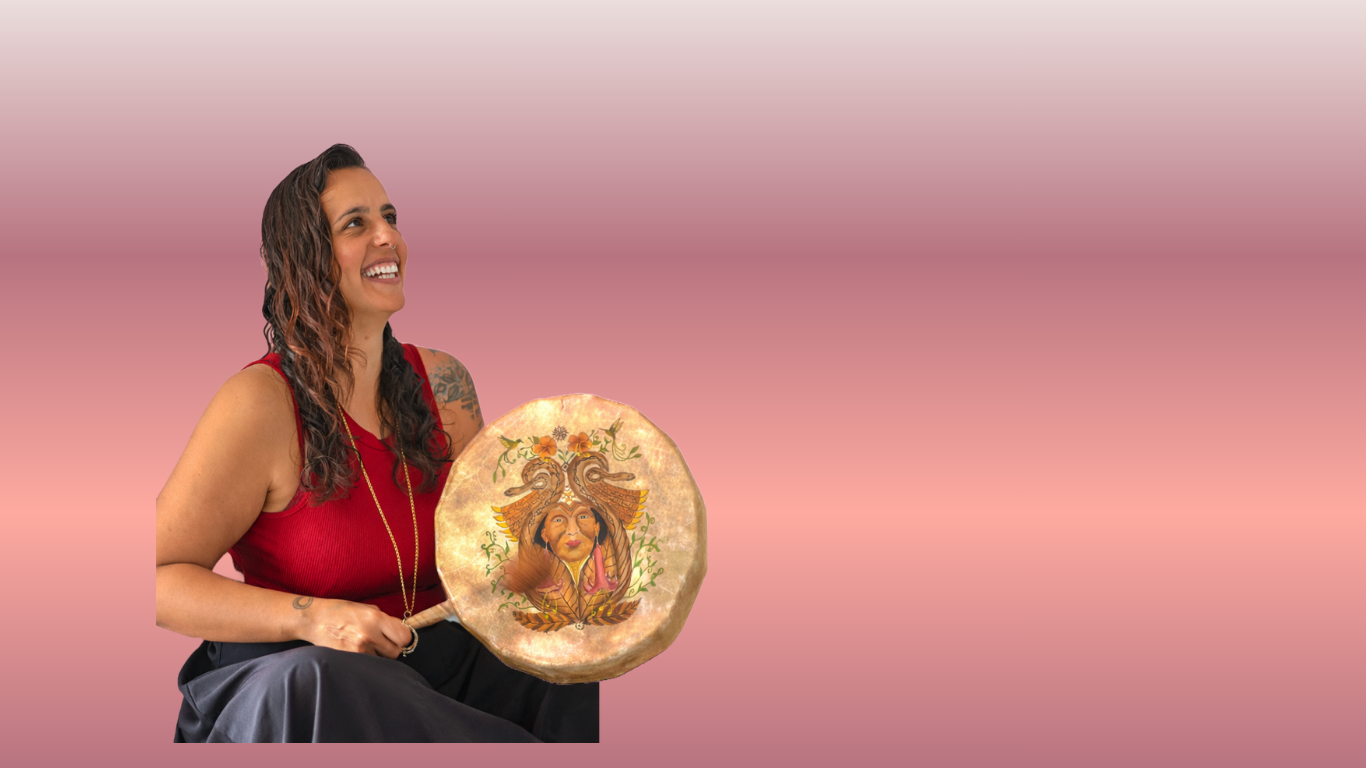
— Rosa F. Brissos, PhD is a somatic trauma coach, psychedelic preparation and integration specialist, and breathwork facilitator based in Portugal. She holds a PhD in Organic & Medicinal Chemistry and works at the intersection of neuroscience, somatic practice, and consciousness.
My work supports personal development, nervous system regulation, and preparation/integration around non-ordinary states. It is not a substitute for medical or psychiatric care.
FAQ
Can science and spirituality coexist?
Yes — when “spirituality” refers to embodied states, consciousness, and relational depth rather than unfalsifiable claims. Some of the trauma research I read — memory reconsolidation, psychedelic neuroscience, the work on how learning is stored and updated — keeps arriving somewhere contemplative traditions described centuries ago. I find that genuinely moving. But I am not going to tell you it is settled, and I want to name one case where I used to be sloppier about this than I am now: polyvagal theory. It is everywhere in my field, it is routinely presented as established neuroscience, and it is currently contested at the level of its basic premises. A 2023 review argued that its five core premises are untenable or highly implausible.[1] A 2026 paper co-authored by thirty-nine specialists in vagal physiology and vertebrate evolution reached the same conclusion — and Porges has published a detailed rebuttal arguing the critique misrepresents the theory.[2] That argument is live, and I am not the person who gets to settle it. What I can do is stop quoting it to you as though it were finished.
Why does nervous system regulation matter in healing?
Because insight alone does not always create change. Nervous system regulation helps the body move out of chronic survival patterns so new choices become more possible, stable, and embodied.
What does “somatic” mean?
Somatic refers to the body. Somatic trauma work engages the nervous system directly — through regulated sensation, safe relational experience, and bodily awareness — rather than working primarily through narrative and insight.
What is the “Science × Soul” approach?
Science × Soul is the framework Rosa F. Brissos PhD uses to integrate biochemistry, neuroscience, and somatic trauma theory with embodied practice, relational depth, and consciousness work. The science polices the room so the soul work isn’t bypassed.
What is psychedelic integration?
Psychedelic integration is the process of translating insight from non-ordinary states into meaningful change in daily life. It often includes reflection, nervous system support, embodiment, behavior change, and relational honesty.
References
(1) Grossman, P. Fundamental Challenges and Likely Refutations of the Five Basic Premises of the Polyvagal Theory. Biol. Psychol. 2023, 180, 108589. DOI: 10.1016/j.biopsycho.2023.108589.
(2) Grossman, P.; et al. Why the Polyvagal Theory Is Untenable. Clin. Neuropsychiatry 2026. See also the reply: Porges, S. W. When a Critique Becomes Untenable: A Scholarly Response to Grossman et al.’s Evaluation of Polyvagal Theory. Clin. Neuropsychiatry 2026. Both listed deliberately — the dispute is unresolved.
References checked 20 September 2026.

Medicinal chemist turned holistic therapist. Working where nervous system science, somatic trauma work and psychedelic integration. Based in Portugal, working worldwide.